Fire doors: the first line of defence for commercial buildings
There were more than 13,000 fires in the UK in non-residential buildings in 2024-5, according to Home Office records, resulting in more than 800 people being injured and 12 deaths. If you manage a commercial building, it is essential to have a robust fire safety plan to help you manage and contain a fire. And your first line of defence is ensuring you have reliable fire safety doors.
Fires in commercial buildings – the facts
Commercial premises, workplaces, and buildings with public access are all classed as non-domestic premises under UK fire safety law, and this classification means strict compliance with fire safety regulations.
These environments are particularly vulnerable because they often have high footfall, complex layouts, and a mix of uses that increase fire risk. The Home Office statistics for 2024–25 reveal that certain types of buildings are more at risk than others:
- Retail premises and hospitality venues account for a significant proportion of incidents due to cooking facilities, electrical equipment, and public access.
- Industrial and warehouse buildings also feature prominently because of machinery and stored combustible materials.
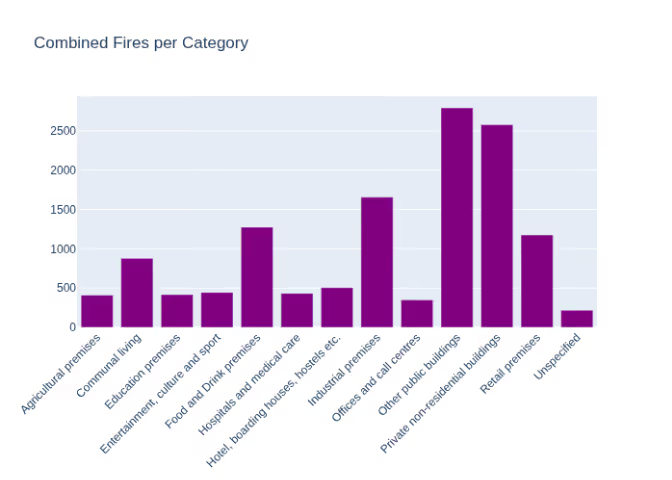
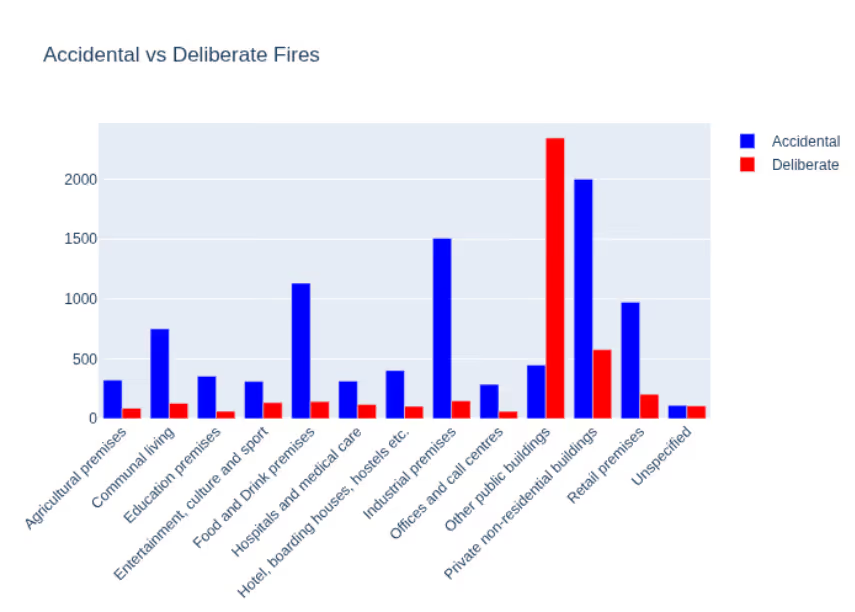
The statistics also reveal that around 30% of these fires were started deliberately, with arson being a major concern in public buildings where public access is unrestricted, but also proportionately in other sectors with open public access, such as retail, hotels and entertainment venues. In contrast, accidental fire – often caused by electrical faults, overheating equipment, or poor housekeeping – are proportionately more common in industrial settings and office environments.
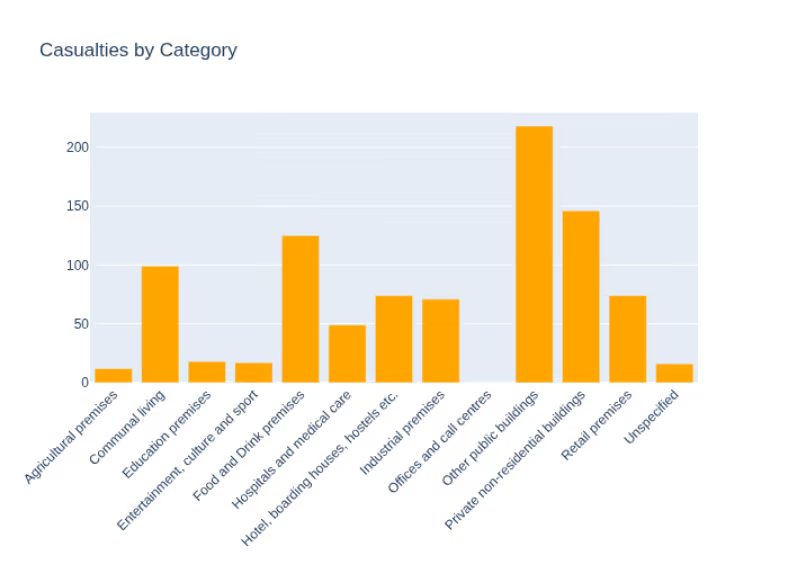
The consequences of these incidents are severe – the most recent Home Office figures show that more than 800 people were injured in fires in non-residential buildings in 2024-5, with public buildings, food and drink premises and communal living buildings being the sectors with the worst track record.
Beyond the immediate risk to persons and life, fires cause extensive property damage, operational disruption, and financial loss.
For property managers, these figures underline the importance of proactive fire safety measures, including the installation and maintenance of fire doors as a critical first line of defence.
How fire doors buy you time
Fire doors are not just another compliance tick-box – they are life-saving barriers. By creating a seal against flames and smoke, they slow the spread of fire, giving occupants more time to evacuate and emergency services more time to respond. Their effectiveness comes from:
- Specialist construction materials such as solid timber or steel cores
- Fire-resistant glass for glazed panels
- Intumescent and smoke seals that expand under heat to block gaps
- Fire-rated hardware for hinges and locks
Fire doors are rated by how long they can withstand fire:
- FD30 – 30 minutes
- FD60 – 60 minutes
- FD90 – 90 minutes
- FD120 – 120 minutes
This time can make the difference between a safe evacuation and a tragedy.
The importance of compartmentation
Compartmentation is a fundamental principle of fire safety design, and it plays a critical role in protecting lives and property. At its core, compartmentation means dividing a building into separate fire-resistant sections, or “compartments,” using barriers such as walls, floors, and – most importantly – fire doors. These compartments are designed to contain fire and smoke within a limited area for a specified period, preventing the rapid spread that can turn a small incident into a catastrophic event.
Fire doors are central to this strategy. They act as controlled gateways between compartments, allowing normal movement during day-to-day operations but forming a robust barrier when a fire occurs. Without compartmentation, flames and toxic smoke can race unchecked through corridors, stairwells and open-plan spaces, engulfing entire floors or blocks in minutes. This not only accelerates structural damage but also severely compromises escape routes, putting occupants and emergency responders at extreme risk.
By contrast, effective compartmentation creates safe zones and clearly defined evacuation paths. It buys valuable time – time for people to exit the building safely, time for emergency services to arrive and tackle the blaze, and time to prevent fire from spreading to critical areas such as plant rooms or storage facilities. In commercial buildings, where layouts are often complex and occupancy levels high, compartmentation is not just a best practice; it is a legal requirement under UK building regulations and fire safety law. When combined with regular inspections and maintenance of fire doors, this approach significantly reduces the risk of injury, loss of life, and costly property damage.
The duties of commercial property managers
Under the Regulatory Reform (Fire Safety) Order 2005, anyone with control of a commercial building -whether you are an owner, landlord, facilities manager or managing agent – has clear and legally enforceable responsibilities for fire safety. These duties are not optional; they are designed to protect lives and property and apply to all non-domestic premises, including offices, retail spaces, warehouses, and public-access buildings.
The first and most critical requirement is to carry out a comprehensive fire risk assessment of the premises and review it regularly. This assessment should identify potential hazards, evaluate who might be at risk, and outline measures to reduce or eliminate those risks. It is not a one-off exercise; it must be updated whenever there are significant changes to the building layout, occupancy, or use.
Next, you must install and maintain appropriate fire safety measures, which include fire doors, alarms, emergency lighting, signage and a fire safety log book. Fire doors are particularly important because they form part of the building’s compartmentation strategy, slowing the spread of fire and smoke and creating safe evacuation routes. These doors must meet the correct fire-resistance rating and be inspected at legally required intervals to ensure they remain effective.
Another key duty is to provide staff training and clear evacuation plans. Everyone who works in or uses the building should know what to do in the event of a fire, where the exits are, and how to raise the alarm. Regular fire drills and clear communication are essential to ensure these plans work in practice.
Finally, you must ensure inspections of fire doors and other fire safety equipment are carried out at the required intervals. Neglecting maintenance can render safety measures ineffective, putting lives at risk and leaving you exposed to legal penalties.
Failure to comply with these obligations can have serious consequences. Enforcement authorities, such as the Health & Safety Executive, have the power to issue notices, impose unlimited fines, and, in severe cases, pursue imprisonment. Beyond the legal implications, non-compliance can lead to devastating loss of life, reputational damage and financial ruin. For property managers, understanding and fulfilling these duties is not just about meeting regulations – it is about safeguarding people and protecting your business.
Fire doors are your building’s first line of defence – maintain them, and you protect lives and property. If you need expert advice on ensuring you’re compliant, we’re here to help.
For expert support to maintain the safety of your commercial buildings, get in touch
.jpg)
.png)