New research highlights risks of one-size-fits-all fire safety plans
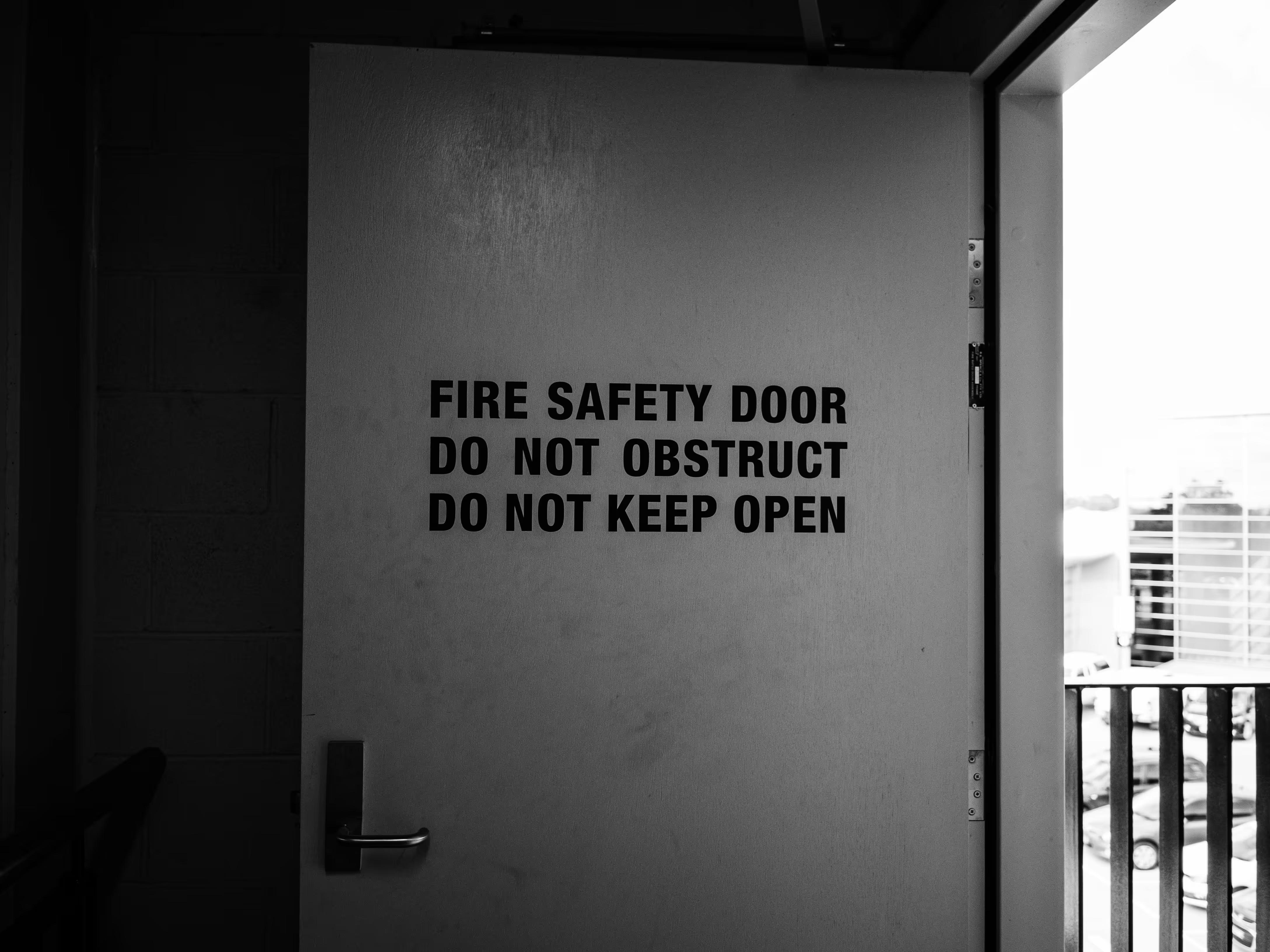
New research by the University of Stirling has found that fire safety measures risk leaving some people trapped in their own homes. The researchers are particularly concerned that heavy, self-closing fire doors create daily barriers and sometimes injuries for people with mobility issues. Their report highlights the complexities of making buildings safe for all, and the need for a new, joined-up approach to resolve the tensions between fire safety, accessibility and housing policy.
Fire doors: safety and accessibility research
The University of Stirling’s research explored how fire safety measures, while designed to protect lives, can unintentionally create disabling environments. Through interviews with housing and health practitioners and data from over 140 older and disabled community peer researchers, the study revealed that heavy, self-closing fire doors often leave residents struggling to enter or exit their homes safely. Some resort to unsafe workarounds, such as wedging doors open, which compromises fire safety.
The report also found that technical adaptations like automatic door openers are expensive, difficult to implement without breaching fire safety certification, and often rejected by residents who dislike the medicalised appearance. This highlights the need for solutions that balance safety with dignity and independence.
Key recommendations of the Fire Doors Report
The researchers call for urgent national leadership and set out five key recommendations:
- Establish a national multi-agency forum to align fire safety, accessibility, and housing policy.
- Embed better training and education across housing, health, and design professions, including awareness of the Equality Act 2010.
- Share good practice examples of accessible fire door adaptations.
- Create centralised advice hubs to reduce costs and confusion.
- Put residents’ voices at the heart of design and decision-making, learning from Grenfell.
Professor Kim McKee summed up the urgency: “We know fire safety is vital – but it can’t come at the cost of people’s independence. We urgently need national guidance that brings together housing, health and fire safety professionals to develop solutions that comply with both fire regulations and the Equality Act 2010.”
Fire doors: just part of the building safety jigsaw
The Fire Doors Report by the University of Stirling highlights how complex fire safety is, with the need to consider different needs and capabilities. After all, while the regulations concern buildings, it’s people that we’re really protecting.
Importantly though, a fire safety plan is about much more than fire doors. While they are critical for slowing the spread of fire and smoke, other elements of the jigsaw are vital to ensure an effective strategy to contain fires and create the best possible opportunities for safely evacuating people from the building.
Fire compartmentation – an essential component in fire safety management
Fire compartmentation is a cornerstone of building fire safety. It involves dividing a structure into separate fire-resisting compartments using walls, floors and doors designed to withstand fire for a specified period. These compartments act as barriers, slowing the spread of flames, smoke and heat from the point of origin to other areas of the building. Common examples include individual flats in a block, staircases and service risers. By containing fire within a defined space, compartmentation provides critical time for occupants to get out of the building and for emergency services to respond effectively.
The role of compartmentation goes beyond simply containing fire; it also safeguards escape routes. Stairwells and corridors must remain protected so that people can exit safely without encountering smoke or flames. This is particularly important in high-rise or complex buildings where evacuation can take longer.
Effective compartmentation relies on meticulous design and construction, ensuring that fire-resisting materials are correctly installed and maintained. Even small gaps or poorly fitted doors can compromise the integrity of a compartment, allowing smoke and fire to spread rapidly.
Maintenance is equally vital. Over time, wear and tear, building alterations or damage can weaken fire barriers. Regular inspections and remedial work are essential to preserve their performance. Fire doors, seals and walls must meet strict standards and be checked for compliance. Without ongoing maintenance, the entire fire safety strategy can fail, increasing the risk of structural collapse and endangering lives. In short, compartmentation is not a one-off installation but a continuous responsibility that underpins the safety of everyone in the building
Fire evacuation strategies – completing fire safety management
A fire evacuation strategy sets out how occupants should respond during a fire. Different strategies include:
- Simultaneous evacuation – everyone exits at once.
- Phased evacuation – occupants leave in stages, prioritising those most at risk.
- Progressive horizontal evacuation – moving people to adjoining safe areas.
- Zoned evacuation – clearing affected zones first.
- Two-staged evacuation – silent staff alerts before full alarm.
- Defend in place – keeping occupants in protected areas.
- Stay put – remaining in flats unless directly affected.
The choice of fire evacuation strategy depends on several key factors, including the building’s design, size, and occupancy type. High-rise or complex buildings with fire-resisting materials may adopt phased or progressive evacuation to prevent overcrowding in escape routes, while smaller premises often use simultaneous evacuation for speed and simplicity.
The vulnerability of occupants is another critical consideration; settings such as hospitals, care homes, or schools may require progressive horizontal evacuation or defend-in-place strategies to protect those with limited mobility or medical needs. Additionally, the nature of the fire risk, available escape routes, and compliance with building regulations and fire safety standards all influence the most suitable approach. Ultimately, the plan must balance safety, practicality and the specific needs of the people inside the building.
It is essential that fire evacuation plans are reviewed regularly. This is particularly important when residents or building users change, especially when new residents or users might be expected to have different levels of mobility, such as in hospitals, care homes or any setting supporting those with limited mobility, such as day care centres.
The challenge with fire evacuation plans was highlighted eloquently by 16-year-old school boy, Lucas, who reported how he was "petrified" at being left on his own in an upstairs room when a fire broke out in his school. Lucas, who has cerebral palsy and uses a wheelchair, said the experience inspired him to launch #NoStudentLeftBehind campaign to improve fire safety for disabled students and make evacuation chairs compulsory in schools.
The research by the University of Stirling has shone an important spotlight on the tensions between fire safety, accessibility and housing policy, and the need for a co-ordinated approach to ensure the needs and safety requirements of all building users and residents are met effectively.
For expert support to maintain the safety of your buildings, get in touch

.jpg)