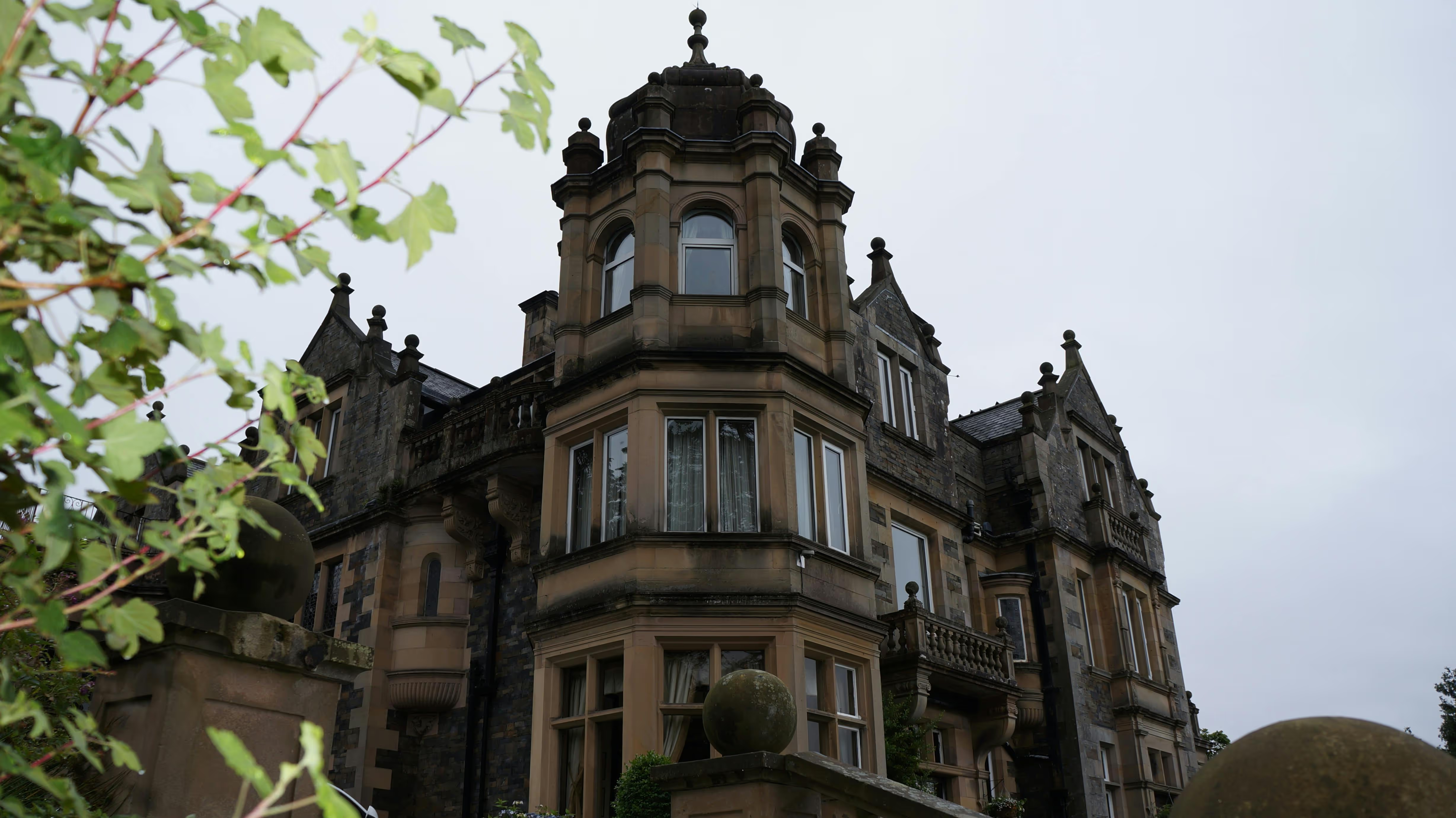
How can I manage asbestos safety in my listed building?
When you step into a listed building, it’s hard not to be struck by its craftsmanship and history. These properties are part of our shared heritage — but many were built long before modern building regulations existed. Hidden behind ornate plasterwork or within aged pipe lagging could be one of the biggest threats to health in older buildings: asbestos.
Managing asbestos in listed properties is essential to protect both occupants and the building’s historic integrity. Yet, like all conservation work, it requires a careful balance between safety and preservation. So how can you protect your listed building — and the people within it — from the risks of asbestos exposure?
What is a listed building?
A listed building is one that’s recognised as being of historic or architectural significance. The designation protects both the interior and exterior, and sometimes even nearby structures or land within the site’s boundary.
Under the Planning (Listed Buildings and Conservation Areas) Act 1990, listed buildings fall into three categories:
Grade I – buildings of exceptional special interest
Grade II* – particularly important buildings of more than special interest
Grade II – buildings of special interest, warranting every effort to preserve them
Across England, there are over 400,000 listed buildings, from historic theatres and cathedrals to Victorian schools and civic buildings. Many of these structures were built before the year 2000, meaning they may contain asbestos-containing materials (ACMs) used for insulation, ceiling panels, flooring and even decorative finishes.
How does the law protect listed buildings?
Any work to a listed property must respect its historic character. Under the Planning Act 1990, it’s a criminal offence to alter, extend, or demolish a listed building without obtaining Listed Building Consent.
When asbestos is discovered, the challenge for property managers is ensuring that its management or removal doesn’t damage protected materials. This requires working in close collaboration with conservation officers and using qualified specialists who understand both heritage preservation and asbestos compliance under the Control of Asbestos Regulations 2012.
Failure to comply can result in fines of up to £20,000 and imprisonment. But, more importantly, it can put people’s health at serious risk.
How can this be a problem for asbestos management specialists?
Balancing heritage conservation with modern safety standards can be complex. Unlike standard refurbishment projects, asbestos management in listed buildings is often constrained by preservation laws that limit invasive work.
Key challenges include:
- Hidden asbestos: ACMs may be concealed behind decorative features or within hard-to-access areas.
- Restricted removal options: Removing materials might require Listed Building Consent, which can delay safety works.
- Limited disruption tolerance: Many listed properties, such as theatres or schools, need to remain open during surveys or remediation.
- Specialist techniques: Non-destructive testing, encapsulation and careful sampling are often required to protect original features.
These factors make it crucial that asbestos management in heritage buildings is carried out by experienced professionals who can navigate both regulatory compliance and heritage preservation.
How does Summit manage asbestos in listed buildings?
At Summit Environmental, we have extensive experience managing asbestos in complex and historic properties — from landmark theatres such as the Dominion Theatre to century-old schools where heritage features must be preserved.
Our asbestos specialists follow a methodical, compliant, and minimally invasive approach that prioritises both health protection and heritage conservation:
- Comprehensive asbestos surveys – Conducted by UKAS-accredited professionals to identify ACMs without damaging historic structures. Find out more.
- Asbestos management plans and registers – Ensuring compliance with the Control of Asbestos Regulations 2012 and providing clear guidance for building managers.
- Regular inspections and re-assessments – Typically every 6–12 months, to monitor ACM condition and ensure safety.
- Encapsulation over removal – Where removal risks damaging historic fabric, encapsulation or sealing techniques are used.
- Collaboration with conservation officers – We work closely with local authorities and heritage bodies to ensure all works meet both safety and conservation standards.
By combining regulatory expertise with respect for historic architecture, Summit helps property owners achieve compliance while preserving the unique character of their buildings.
Your responsibilities under the law
If you own or manage a building built before 2000, you have a legal duty to manage asbestos under Regulation 4 of the Control of Asbestos Regulations 2012. This includes:
- Identifying asbestos-containing materials through professional surveys
- Keeping an asbestos register
- Developing and maintaining an asbestos management plan
- Ensuring that anyone who may disturb asbestos is properly informed and trained
- Reviewing the management plan at regular intervals
Government campaigns such as Work Right’s ‘Asbestos – Your Duty’ and ‘Asbestos – You’ reinforce the need for ongoing vigilance in managing legacy asbestos risks.
Managing asbestos safely in heritage environments
The safest way to manage asbestos in a listed building is through careful planning and continuous monitoring. Even if ACMs are in good condition, they can still pose a risk if disturbed during maintenance or renovation.
Working with a qualified asbestos consultant ensures:
Proper identification of materials through accredited laboratory testing
Safe sampling and risk assessment
Minimal disruption to historic structures
Compliance with all legal and conservation requirements
At Summit, our approach combines science, safety, and sensitivity to ensure listed buildings remain both compliant and conserved.
Protecting the past doesn’t mean compromising on safety. With the right asbestos management strategy, you can safeguard both your building’s heritage and the health of those who use it.
For expert support to maintain the safety of your facilities, get in touch with Summit Environmental today.
.jpg)
.png)